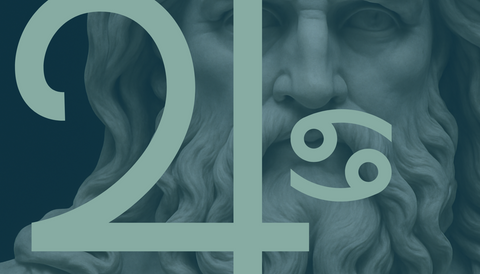
(You can calculate your Jupiter Revolution for free in this link .)
A planetary revolution occurs when a planet returns to the exact degree and minute of the sign in which it is located in the natal chart . This moment marks a point of review of that planet's character and, at the same time, a reset: we review how we have been developing that energy, but we also open a new cycle with respect to it. Therefore, it is a change of stage in the relationship we maintain with that archetype and with the experiences that accompany it.
The Jupiter Revolution is unique within these cycles because it activates horizons that previously seemed unattainable . This revolution is one of the most anticipated because it dramatically amplifies our ability to project, to see further, to move toward scenarios that, in previous stages, were unimaginable. Jupiter is the force that expands the territory of the possible . Its revolution often coincides with decisions that alter the direction of life and with opportunities that mark the architecture of the following decade.
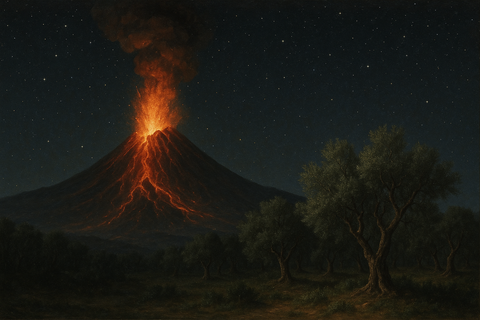
Its energy behaves like a spark : when we go through a Jupiter Revolution, that spark ignites and it is our task recognize it, receive it and respond to it with action, and above all, enthusiasm.

The Meaning of Jupiter in Astrology
Jupiter, the largest planet in the solar system, takes approximately 12 years to complete its journey through the zodiac , spending about a year in each sign.
Jupiter rules the spiritual plane, a realm where there are no limits, no time, no causality . It is the bridge between that field of infinity and our concrete experience. Physicist David Bohm called it the "implicate order": an underlying plane where all possibilities exist in a latent state before manifesting. Philosopher Henry Corbin described it as the mundus imaginalis : an intermediate territory between the visible and the invisible, where the spiritual takes form without being fixed in matter.
Jupiter's function, then, is to bridge the gap between that immaterial dimension and the physical world . Thus, its revolutions show us in a flash of clarity what could be ; and then it is up to us to integrate that possibility into tangible reality as the revolution unfolds.
In other words, Jupiter's revolutions open horizons because they transform nothing less than our relationship with reality , helping us reorder experience in terms of purpose. Thus, Jupiter is ultimately the spark of the divine that descends : the lightning bolt that ignites vision and allows us to see what, until then, seemed impossible.
More than enough credentials to be one of the most anticipated revolutions.

What is the Jupiter Revolution?
The Jupiter Revolution occurs when the planet returns to the exact degree and minute it was in at the time of birth ( most often on a completely different date than one's birthday ). This moment marks the beginning of a new Jupiterian cycle in which a new and stimulating spark of possibility is projected : that ray that ignites a new direction, broadens the horizon, and redefines the relationship with reality.
This revolution occurs approximately every 11 to 12 years —depending on Jupiter's speed—so we all have a new revolution around the ages of 12, 24, 36, 48 , and so on. Each of these revolutions marks a shift in our relationship with the possible , a new vital territory that opens up and reconfigures the way we navigate the world. If we harness its potential, it represents a profound reorientation of vision and horizon .
Jupiter's Revolution Chart
The Jupiter Revolution chart is calculated for the exact moment the planet returns to its natal position and for the geographic location where the person is physically located at that moment. This detail is essential: the location modifies the chart's axes—Ascendant, Midheaven, houses—and defines the specific scenarios through which this expansion will unfold during the cycle.
The structure of this chart is similar to that of a solar revolution or any other planet. It contains the Ascendant, houses, Midheaven, aspects, and specific configurations that function as a developmental script for the entire cycle. The only factor that remains constant is the exact degree and minute of Jupiter , but its position by house, its aspects, and its relationship to the rest of the chart They tend to be completely different from those in the natal chart. It is in this new configuration that the particular "roadmap" of the revolution in question unfolds.

Stages of the Jupiter Cycle
The Jupiter Revolution doesn't end in the year it occurs . What begins at that moment unfolds over a cycle of approximately 12 years, with a rhythm that can be recognized in five major phases . Each has its own pulse: from the initial spark to the conclusion that prepares the ground for the next return.

Phase 1 – Ignition
It corresponds to the year of the revolution ; it can begin to be glimpsed even a year before the exact date of the revolution. It's the moment when something is revealed . It can happen suddenly, even in a place or situation where we least expected it. Sometimes it appears as an extraordinary, crystal-clear opportunity . Other times, the opportunity appears as something that feels unfortunate at the time . Both forms are equally common, because what matters is not how it arrives, but what it unleashes.
This revelation marks a turning point . It's that moment when a vein of possibility emerges and something inside us recognizes: "Damn, this could be possible!" That feeling, of course, usually recharges us with enthusiasm, anticipation, and vital energy.
What this phase requires for us to successfully navigate is that we open ourselves to something new that we've never tried before , that we expand our vision to a new possibility and visualize what could emerge from this moment. This period requires us to take risks , to respond to that call that begins a new adventure, and to dare to step outside the box .

Phase 2 – Construction
This phase begins when Jupiter, by transit, forms the first square with its natal position; approximately 3 years after the revolution . For example, if a person has Jupiter at 15° of Aries, this stage begins when Jupiter transits at 15° of Cancer. The sensation is very different from the ignition phase: if before everything was impulse, spark and possibility, now the energy lands . The weight of what was activated begins to be felt. What was intuition begins to become an incipient structure. It is a stage where Enthusiasm transforms into sustained work, where the vision encounters its first real limits and begins to take concrete form.
Within this same phase, there is a particularly relevant point: when Jupiter, by transit, forms a trine to its natal position (approximately 4 years after the revolution begins). That is, the same person with natal Jupiter at 15° Aries will experience the trine when Jupiter transits at 15° Leo. This moment usually marks the harvest of the first fruits . What was initially an idea or an intuition begins to manifest in a tangible way . It is not yet the maximum expansion of the cycle, but it is the instant in which the initial promise becomes a visible reality .
What this phase requires is that we build with strategy and commitment . Here we must organize, prioritize, and sustain what was started with concrete actions. Inspiration isn't enough: we must give it form , even if that form is imperfect and still in development. This stage demands focus, perseverance, and a long-term vision . What is consolidated here becomes the foundation upon which the following phases of the cycle will be based.

Phase 3 – Completion
This phase is activated when Jupiter, in transit, forms opposition to your natal position . This occurs approximately six years after the beginning of the revolution . If we have taken advantage of the previous phases, by this point expansion is no longer an idea or a possibility: it is part of tangible reality . What began as a spark, and then took shape during the construction phase, reaches a visible point of culmination .
It's common that if we've done the necessary work and embarked on this adventure, at this point our life seems unrecognizable from where it began . Beliefs have expanded and transformed; the way we perceive the world is no longer the same as it was six years ago. External opportunities and the first signs of real growth emerge, confirming that the path taken has generated profound changes. It's also a time of forks in the road : growing with a clear direction or dispersing the expansion.
Within this same phase, an important nuance occurs: the waning or return trine , which occurs approximately 8 years after the beginning of the revolution. Again, in the example of the person with natal Jupiter at 15° Aries, this trine occurs when transiting Jupiter reaches 15° Sagittarius . Here, too, fruits are reaped , but of a different kind: it is a period in which we begin to look back and recognize how this expansion has consolidated, which paths reached their point of maturity, and which details need fine-tuning. It is not a moment of impulse, but of evaluation and fine-tuning .
Regardless of the trine, this phase as a whole brings with it tension , because here expansion reaches its peak and reorients itself . What was once momentum and growth needs to be sustained as the new "baseline." It's common for challenges, adjustments, or important decisions to arise that determine the form this expansion will take in the following years. What this phase requires is to embrace that expansion responsibly , not let it dissolve into dispersion.
Phase 4 – Maturation
This phase begins when Jupiter, by transit, forms the waning or returning square , approximately 9 years after the beginning of the revolution. In the person in the example with natal Jupiter at 15° Aries, this square occurs when Jupiter transits through 15° of Capricorn . Unlike the previous phases, here the energy does not feel as expansive or as external . There is an inward turn: less impulse, more review. This square introduces a different tension, a quieter one, which pushes to gradually close down processes that have already fulfilled their function .
It's a time of relative calm, but not stagnation. What happens here is that we begin to look back , to refine beliefs, and to clearly recognize which parts of our old vision no longer have a place in this stage of life. Adjustments, internal and external readjustments, and an increasingly clear need to let go of the remnants of a vision of life that belonged to the previous cycle arise.
What this phase requires is honesty and openness to purify without resistance . While this may not be the most exciting phase of the cycle, it's not a time to force new beginnings, but rather to process, integrate, and make space for what's to come. This stage allows the approaching closure to occur more cleanly, without carrying with it beliefs, expectations, or dynamics that no longer make sense in the new version of our lives.

Phase 5 – Closure
This phase usually begins when Jupiter enters the sign prior to the one it is in in the natal chart. Let's return to our example of the person with natal Jupiter at 15° of Aries: for him/her, this stage begins approximately when Jupiter enters Pisces . This occurs between 10 and a half and 11 years after the start of the revolution.
The dominant sensation is different from all the previous phases: here, the initial spark is no longer present with the same force . There is stability, but little novelty. It can feel as if the expansion has slowed down, and what predominates is a flatter, less enthusiastic tone. Many people describe this stage as a calm but also somewhat dull phase. Possibility is no longer experienced as openness, but as something reaching its limit .
As this phase progresses, the feeling that something is missing grows . It becomes more clear that what brought us here will not be what will carry us to the next cycle. The first internal concerns arise: "Something has to change." And, in fact, this phase gradually culminates when the countdown begins—the last year before the exact return. At that moment, the first signs of what Jupiter's next revolution will be begin to appear, marking the threshold between one cycle that is concluding and another that is about to begin.
What this phase requires is listening to that murmur of change without forcing premature exits . It's not a stage for making impulsive decisions, but rather for recognizing the natural closing of a chapter and allowing the next spark to arrive with force when appropriate.
How to Interpret a Jupiter Revolution: A Brief Introduction
Each Jupiter revolution is different, but its potential is always connected to Jupiter's natal position in the chart . The natal sign remains the same—therefore, the way we express that energy is always the same —but what changes with each revolution is the area of life in which that energy unfolds.
In our example for this post, let's assume this person with Jupiter at 15° of Aries has it located in the natal 4th house . In the current revolution, Jupiter is located in the 9th house , so all that expansion and opportunity—travel, studies, horizons, vision—will eventually lead to a purpose tied to the themes of the natal 4th house : roots, emotional territory, home, sense of belonging.
All Roads Lead to Rome
In other words: all paths of revolution lead to the natal house where Jupiter is located . Revolution expands and activates, but the matrix of that expansion is always natal .
From there, the interpretation is structured into four basic axes:
• House where Jupiter falls in the revolution → shows the main stage where expansion unfolds during the cycle.
• Sign → does not change; indicates the tone, rhythm and style with which this expansion manifests itself.
• Aspects → reveal key supports and tensions, the forces that facilitate or challenge this unfolding.
• Relationship with the rest of the transits of the year → contextualizes the revolution within the broader fabric of transits that the person goes through in that period.
Jupiter's revolution doesn't erase the natal position : it activates it, expands it, and makes it more visible. Understanding this dynamic is what allows read each return as a different chapter within the same narrative line.
Practical Tips for Navigating the Jupiter Revolution
Going through a Jupiter Revolution isn't about waiting for life to expand on its own. It's about recognizing the spark when it appears , acting with conviction, and sustaining what that expansion will require in the years to come. The initial impulse can feel like a powerful wave—but if it's not channeled with direction, it disperses as quickly as it appeared.
• Observe the initial impulse without getting distracted. The first year sets the tone for the entire cycle. Paying attention to what sparks and how we react to it is key. Not everything that comes along is worth taking; clarity at this stage prevents future overflows.
• Consciously choose what you want to expand. Jupiter amplifies what it encounters—both what it contributes and what it doesn't. Therefore, it's not enough to simply "seize opportunities": you have to choose them wisely, ensuring they're aligned with a larger purpose.
• Build structure and strategy from the start. What begins as inspiration needs support. Expansion without structure fizzles; expansion with strategy consolidates.
• Maintain consistency between vision and action. Throughout the cycle, this consistency will determine what flourishes and what fades. When what we do responds to the direction of our vision, the results can surpass even our wildest fantasies.

Glossary of Recurring Terms in the Revolutions of Jupiter
Some words appear repeatedly when we talk about Jupiter's revolutions. These are central concepts that structure the experience of this cycle. Understanding them in depth allows us to better understand what is happening and make more informed decisions throughout the cycle.
• Vision: the starting point of the entire cycle. It is the ability to internally imagine a possible scenario before it exists externally. During Jupiter's revolution, this vision expands, stretches, and tenses to shape the direction the expansion will take.
• Risks: situations in which there are no prior guarantees. They involve moving outside the known and acting without certainty. Every Jupiterian revolution requires taking at least one structural risk. Taking risks doesn't mean recklessness, but rather stepping outside the familiar to create space for what didn't exist before.
• Expansion: The process of taking on more—in terms of resources, scope, experience, etc.—than what was handled at the beginning of the cycle. In other words, it's expanding the scope of action.
• Opportunity: that which appears as an open door. It isn't always recognized as something obvious or "positive" at the time; sometimes it disguises itself as a challenge or an unexpected turn of events. In many of these cases, opportunities are recognized only in retrospect.
• Comfort zone: a set of habits, structures, or environments that offer stability but limit the scope of what's possible. All real expansion involves moving away, to a greater or lesser extent, from this zone. Jupiter's revolutions inevitably strain it, pushing us to expand it.
• Faith: not in a religious sense, but as active trust in a path that is not yet guaranteed. It's what allows us to move forward when there are still no certainties.
• Conviction: is the Sustained determination to stay the course when the initial phase of enthusiasm fades. This is what allows us to overcome tensions without deviating from the axis of expansion.