Uranus takes approximately 84 years to complete a complete orbit around the zodiac. During this cycle, it will transit through the 12 houses of our natal chart, remaining in each of them for approximately 7 years (except in the natal charts of people born at extreme latitudes, where the size of the houses can vary drastically).
As a transpersonal planet, Uranus doesn't limit itself to operating on an individual level. Its movement reflects collective processes of transformation , and when it activates a natal house, what's at stake isn't just a personal experience, but an invitation to break away from the conditioning that keeps us in obsolete structures . Its transit erupts with force, accelerates already latent processes, and dismantles any rigidity that impedes change.
The Indian philosopher Jiddu Krishnamurti wrote:
“It is no sign of good health to be well adjusted to a profoundly sick society.”
That is, in a way, the premise on which Uranus operates: pointing out what we have normalized without question , and which probably no longer makes sense or has a place in our lives. During these transits, what seemed stable, comfortable, or secure can collapse to make room for a version more in line with what we have come to embody in this life. Unlike Saturn (which creates form), Uranus breaks it to make way for something completely new . For this reason, its transits are often experienced as disruptive, revelatory, unexpected, or even chaotic experiences. But chaos, in symbolic terms, is not just disorder "for the sake of it": it is the state before creation.
When Uranus transits a house, it confronts us with the cage we've created for ourselves. And while its passage doesn't guarantee freedom—because that requires internal work that can be arduous—it does open up new paths and shake us out of inertia , so we can choose again from a different place.

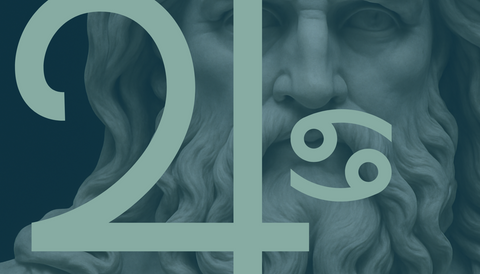
The Glyph of Uranus
The glyph representing Uranus is composed of a central H crossed by a vertical line , with two semicircles facing outwards and a circle at the base of the vertical line.
The central H is a direct reference to William Herschel , the astronomer who discovered Uranus in 1781, breaking with the traditional limit of planets visible to the naked eye. This inclusion of a proper name in the symbol is, in itself, a Uranian gesture: inscribing individuality within the order of the cosmos .
But beyond the historical reference, this glyph visually expresses the disruptive, electric and liberating nature of Uranus :
• The central vertical line represents an axis, an energy that runs through all planes—a kind of ray, as if symbolizing the descent of a higher truth that breaks with the established.
• The two opposing semicircles , which open to the sides, are associated with the opening of consciousness, the separation of poles, and eccentric movement. In other words, they can be understood as "antennas" that receive information from the collective field; or as an opening of the mind toward the unexplored.
• The circle at the base symbolizes the spirit, or individual soul, that holds or receives that download of consciousness. Its location at the base reinforces the idea that liberation comes from above, but must be embodied .
The Uranus glyph suggests a connection to a higher order , with a flow of information that deconstructs, decenters, and activates. If Saturn —the planet that comes just before Uranus in the Solar System — demands limits to consolidate, Uranus breaks limits to awaken . Its glyph, with all its open, curved shapes and sharp verticality, reflects that quality of energy that bursts forth, like a discharge that forces a change of state .
The Behavior of Uranus in Transit
Unlike Saturn, which acts from the visible and concrete , Uranus operates from a transpersonal plane . Therefore, its transits are often experienced as unexpected, uncontrollable, or even incomprehensible experiences. Thus, the experiences associated with these transits do not respond to our conscious will, but rather to processes of liberation that were already latent , waiting to be activated. In other words, an area of our life is activated that—although we weren't fully aware of it—could no longer remain the same. And although the process can be chaotic, what emerges is a much more lucid and liberating (and therefore healthy) level of consciousness.
Here are some keys to not losing perspective when we are going through a Uranus transit:
1. Mind racing; need for something new.
When Uranus enters a house in our natal chart, we often experience an increase in mental activity: thoughts become faster, more restless, "electric." We may feel that our mind can no longer tolerate repetitiveness, structure, or predictability. This discomfort—which can range from mild annoyance to an urgent need for change—marks the beginning of a period where the internal rhythm accelerates, and external events inevitably begin to synchronize with that movement.
2. Change is inevitable, and it almost never happens the way we imagined.
Uranus doesn't wait for us to be ready. If what we're experiencing is vital, it empowers it. If it's already dead, it dismantles it. The transit doesn't ask permission: it interrupts the dominant pattern so that a more coherent direction can emerge.
3. The more we resist, the more uncomfortable it becomes.
When we're open to change, Uranus transits can feel liberating, even if we don't know exactly where they're taking us. But if we resist and deny that anything is trying to transform, the transit becomes increasingly uncomfortable. It's not the change itself that destabilizes us, but the insistence on maintaining an order that's completely obsolete. Uranus's logic is simple: if something needs to change, it will. And the more we block it, the more abrupt the cutoff. At the end of the day, Uranus always eventually makes its way—by fair means or foul.
4. We can have sudden revelations.
Uranus has an electric, abrupt logic: in an instant, what we didn't see becomes evident. And once we see it, we can't go on like this; we can't "unsee" it. Those moments of clarity mark a before and after.
5. What is dismantled leaves room for a more authentic life.
Although the process is difficult, it often leads us to a freer and more honest version of life. Even if we're just cursing at the moment, the earthquake we feel isn't punishment, it's a reset. We'll see it in retrospect.
6. Not everything that makes us uncomfortable needs to be destroyed.
During these transits, we may feel the urge to cut it all off. But this can be delicate; there are many things we may regret once the transit ends. Uranus can push us toward radicalism, but it's up to us to discern when to pivot—and when to simply change our stance.

Uranus and the Form That Comes from Chaos
The name Uranus comes from the ancient Greek Ouranos (Οὐρανός), literally meaning sky . Sky in the sense of the celestial vault —the structure that envelops the world and shapes it from above. In mythology, Ouranos is not just another god: he is the first organizing principle , the consciousness that imposes order on chaos.
According to Greek cosmogony, Ouranos emerges directly from Chaos and unites with Gaia, the Earth. From this union, the first creatures are born: the Titans, the Cyclopes, the Hecatonchires. Monstrous, excessive beings that surpass the limits of any known form. Uranus, unable to accept this chaotic manifestation, represses them: one by one, he pushes them back into Gaia, denying their existence.
This gesture—that of denying what doesn't fit with the ideal —marks the original conflict between projected perfection and the emerging reality . In the myth of Uranus, we see the conscience censoring what it finds dissonant: the excessive, the disordered, the unpredictable.
And during its transits, that same logic can be reactivated in us. Sometimes we project a brilliant idea or a perfect image of the change we desire—and no sooner have we tried to embody it than we became frustrated with its imperfection, discarded it, and repressed it again . Uranus not only manifests as the repressed returning: it can also become the ideal that tolerates no process , demands immediate results, and discards all forms if they don't match the original vision . That's why, during its transits, we can move between extremes : from radical enthusiasm to sudden abandonment, from euphoria to total disinterest.
But let's return to the myth. Gaia, unable to continue containing what she has denied, conspires with her son Cronus, who castrates Uranus and ends his rule. With this symbolic break , time, history, and sequence begin . The pure ideal gives way to concrete life, with its limits, conflicts, and processes. However, Uranus does not disappear . His energy remains as the impulse that precedes form , like the spark that breaks the mold when the structure ceases to be fertile.
This rupture, however, is not an end in itself. In the myth itself, the blood of Uranus gives rise to Aphrodite, goddess of beauty, as the principle of harmony after conflict . This reveals that Uranus's function is not to destroy what exists, but to break what has become rigid so that a new harmony of form can be produced.
Therefore, although it is often thought of as opposed to Saturn, Uranus needs to dialogue with matter and form . This is also the teaching of its glyph: the ray doesn't remain suspended high—it descends and touches a center. Uranian energy, if not embodied, remains merely a revelation without any impact . Uranus and Saturn have contiguous orbits, and this closeness is not only astronomical. The Uranian principle needs to pass through the Saturnian structure to have an effect on the tangible world. Otherwise, it remains trapped in the ideal realm, unable to transform reality.
Uranus Transit in the Twelve Houses: Important Aspects to Consider
Generally speaking, a Uranus transit is most strongly felt during the first half of its journey through a natal house . It's at this stage that the pace of events accelerates (especially when it's just entered the new house), unexpected situations arise, abrupt changes, or a growing sense that life as it's been going on is no longer of much interest . These aren't always external crises—sometimes what becomes intolerable is a routine, a way of life, or an internal structure that we can no longer sustain.
If we also have natal planets in that house , the moments of conjunction often coincide with important disruptions: a relationship, a job, a system of values may enter into crisis or suddenly transform. But they can also be moments of revelation , where we access a clarity we didn't have before.
The intensity of the first half of the transit serves to deconstruct the obsolete , accelerate processes that had been held back, or force choices we had postponed. If we respond to that energy with openness—even if it's difficult, even if we don't have all the answers—the transit can become lighter toward the end.
In general, the last third of the transit tends to be more bearable . Not because Uranus has stopped operating, but because the major disruption has already occurred , and we're in a period of adjustment, integration, and greater clarity. When we're no longer resisting change, we can begin to understand where it's leading us.

Uranus transits through House 1
This transit begins when Uranus crosses the Ascendant , a key point in the natal chart that symbolizes The embodiment of the soul in matter. It is the intersection between heaven and earth, between the potential and the visible. The Ascendant not only speaks of our presence, our body, and our external identity; it is also the channel through which we manifest, on the physical plane, what is contained in our entire natal chart. Therefore, the entry of Uranus here marks the beginning of a disruptive but extremely fertile phase , which destabilizes the known ways of being and acting in the world to enable a more authentic and free part of us that we had forgotten.
If we approach this transition rigidified by an identity that no longer represents us, we will clearly notice the imbalance: unexpected changes, impulsive decisions (whether those of others or our own), changes in our body or in the way we present ourselves. The discomfort and the chaos then come from the distance between who we are and what we present .
If we've been living under other people's expectations, maintaining a persona out of fear or inertia, this transit can open a rift through which we can reconnect with who we truly are. Most of the time, this dynamic isn't necessarily orderly: it can be accompanied by conflicts in our relationships, shifts in public perception, an urgent need for change, or even self-reinvention, whether precipitated by external circumstances or our own initiative.
The 1st House governs the image we project outward, but also how we perceive the world and how the world perceives us . With Uranus here, that perception changes pace: our minds race, our bodies may become more reactive, and people around us may start to feel surprised by our more unpredictable behavior . Visible physical transformations—a change of style, losing excess weight, a new haircut—are not uncommon, but beyond the external, what is being reconfigured is the very structure of identity .
This transit can also confront us with an internal dilemma: we want to change, but we don't know what to do . We may feel in between versions, as if the old no longer serves us but the new has yet to take shape. This ambiguity is part of the process; Uranus doesn't provide immediate answers. It forces us to try, to disrupt, to improvise. It requires tolerance for disorder , but also a willingness to embrace the unexpected and the different as part of our way of being in the world . Only then can real beginnings emerge.
On another note, this transit: since this house also rules the physical body, Uranus can bring sudden changes in vitality, the nervous system, or the rhythm of our existence. It can feel like an excess of energy that's difficult to channel: insomnia, muscle tension, mental acceleration. During this transit, we need to find new ways of being in our bodies : we may feel the need to change routines, release tension, and modify our relationship with space.
Throughout this journey, if we allow ourselves to let go of the tired personas and explore the person we truly are , we can give way to a freer, more awake version of ourselves—with our virtues, flaws, imperfections, and quirks—and end up loving ourselves just as we are, without ever trying to be anything else to fit in.
Tips for Uranus Transiting Your 1st House:
1. Create spaces for the new, even if you don't know what it is yet
This transit requires freedom to operate. If you fill your days with unchanging routines, repetitive relationships, or external demands that suffocate you, discomfort will increase. Make room for the spontaneous. Even if you're uncertain, make room in your schedule, in your body, and in your life for something different to enter.
2. Listen to your body as if it were an antenna
Uranus alters the nervous system: insomnia, energy surges, tension, or mood swings can be signs that something is asking to be released. The body isn't failing—it's processing an internal transformation. Instead of fighting it, observe what needs to change: diet, movement, schedules, rest habits, or even how you dress.
3. Don't be scared if you don't know who you are for a while
The 1st House is the self, and Uranus disassembles it to rebuild it. You may feel strange about yourself, your body, and your decisions. Don't force yourself to define yourself quickly. This transit isn't seeking a new label, but rather a more label-free identity. Tolerate the initial confusion: you are changing in important ways.
4. Dare to start something that truly represents you
Uranus in the 1st House is an excellent time to radically change how you start things: a project, a way of life, your relationship with yourself. It's not about doing everything differently out of rebellion, but rather aligning yourself with what truly represents you. If you don't innovate voluntarily, life will likely force you to do it anyway.
5. Redefine your way of being in the world
How do you present yourself? What image do you cultivate? What parts of yourself are you hiding for fear of judgment or rejection? This transit can shake those masks. Instead of resisting it, use this stage to experiment, laugh at yourself a little, make mistakes, and try again. This is trial and error; there's no other way.
If You Take Advantage Of This Transit, You Can Expect:
• Reconnection with your authenticity.
You will end this transit with a clearer sense of who you are without masks or inherited roles.
• Visible changes in your body and lifestyle.
By releasing internal tensions, external forms are also released. It can change your posture, your way of moving, your way of dressing, your way of presenting yourself. The body is a tangible reflection of internal transformation.
• Beginnings that break with the past.
Something new begins: a different way of living your life, starting projects, or making decisions. Not because you planned it, but because you finally gave yourself permission to do it differently.
• Greater tolerance for uncertainty.
There will be moments of confusion, but if you move through them without trying to force definitions, you will gain mental flexibility, spontaneity, and openness to the present.
• Innovation as a way of life.
You'll learn that you don't need total stability to move forward. That you can reinvent yourself without the world falling apart, and that every true change leaves a mark that ends up becoming a vital part of your story.

Uranus transits through House 2
Uranus's transit through the 2nd House marks a period of liberation and innovation around security, resources, and personal worth . This house represents how we create stability: not just through money, but also through our abilities, our habits, and our sense of worth. With Uranus here, all of that becomes unstable—because it needs to be actualized .
The first thing that usually shakes up is the relationship with money . Income may become irregular, change sources, or depend on less conventional methods. Old management schemes stop working, and it becomes clear that we can no longer build stability based on obsolete structures. In some cases, this transition may be accompanied by financial disruptions—losses, bankruptcies, unexpected changes—which, rather than punishment, are an impetus to rethink where we are generating value .
But it's not just money that's at stake: what's collapsing are also the forms of security that no longer represent us . Perhaps we realize we no longer want to depend on an income that suffocates us, on a system we no longer feel is our own, or on inherited beliefs about success, work, or worthiness. Uranus dismantles all of this so we can more consciously choose what is valuable to us—and what is no longer.
During this transit, new ways of generating income are likely to emerge—more flexible, technological, self-managed, or downright eccentric—as well as a desire to free ourselves from any source of economic dependence that limits our personal freedom . But this transformation requires taking risks, so if we haven't felt comfortable taking them, this is a good time to exercise that side of us. The feeling of instability may be real, but it can also act as a catalyst to connect with our talents in a more autonomous and less conditional way.
On the other hand, the 2nd House also governs our connection to the body, to physical rhythms, and to the more concrete material plane. Therefore, Uranus can activate a search for greater autonomy in the way we inhabit matter : changing our relationship with food, with the objects we use, with what we consider essential. We may feel the need to let go of what has accumulated—to get rid of things, expenses, outdated values—and simplify our lives to regain inner freedom .
On a symbolic level, this transition makes us ask ourselves: What do we value when everything else changes? Uranus in the 2nd House doesn't tolerate external definitions of value . It asks us to recognize what truly gives us stability—not just what simulates it. And to do that, it's sometimes necessary to let go of certain security to discover a more solid and real one waiting behind.
If we open ourselves to redefining our scale of values—if we stop measuring ourselves against the criteria of others and begin to forge a new relationship with money, our bodies, and our self-esteem—this transition can mark a before and after in the way we sustain ourselves in the world .
Tips for Uranus Transiting Your 2nd House:
1. Make room for new ways to generate income
This transit encourages you to break away from rigid economic models. Explore alternative, self-managed, or more flexible sources of income. If what you do to support yourself financially no longer resonates with you, Uranus will push you to change. Don't wait for certainties before you begin: start by trying.
2. Question what you call security
Are you relying on a routine or an income just because it's "steady"? Uranus dismantles apparent security to show what makes real sense and what doesn't. Use this transit to identify where you're holding back out of fear and what you could let go of without losing your center.
3. Simplify to release energy
We accumulate more than we need: objects, expenses, demands. Uranus in the 2nd House can generate a strong desire to let go of what binds you. Organizing your finances can also begin by reducing: fewer possessions, fewer demands, more clarity.
4. Redefine your scale of values
This transit isn't just about money; it's about what you hold dear. Are you clinging to priorities that no longer relate to you? Uranus invites you to honestly review your value system. What truly matters will survive the change.
5. Trust in your capacity for creative self-sustenance
The ground may shift beneath your feet, but that doesn't mean you can't move forward. This momentary instability is a way for you to discover a more authentic way of building it. Your talents can flourish in contexts you wouldn't have imagined before.
If You Take Advantage Of This Transit, You Can Expect:
• Greater economic freedom
If you dare to break away from outdated patterns, you can create a more free, flexible, and autonomous relationship with money. Don't rely on "safe" things, but trust in your ability to reinvent yourself.
• Deep redefinition of what you value
By letting go of what's been imposed or inherited, you can reconnect with a set of values that is more consistent with who you are now. Your life begins to reflect what truly matters, not what's expected.
• New sources of income more suited to you
If you explore your talents openly, this transit can open up unexpected and positive career paths.
• Simplicity as a form of well-being
Less accumulation and more focus. Uranus teaches us that we have more than we need, and that often the excess is an extra burden that drains us without us realizing it. You may discover that simplifying isn't about losing, but rather about recovering energy, time, and presence.
• Internal stability based on your own criteria
By redefining your relationship with value, money is no longer the sole measure. You feel more in control of yourself, not by what you have, but by what you know you're worth (in the broadest sense of the word) and what your capabilities are.

Uranus transits through House 3
Uranus's transit through the 3rd House marks a radical reconfiguration of internal dialogue . This house governs immediate mental processes, communication, practical learning, and connections with our immediate surroundings—siblings, neighbors, and people with whom we share our daily lives. With Uranus here, this entire system accelerates, shakes up, and transforms .
During this transit, the mind becomes much quicker . We may experience bursts of intuition, think about many things simultaneously, or begin to perceive facts from a different perspective, almost as if we're absorbing information through osmosis. Ideas come to us all at once. We may struggle to sort them out, but unexpected connections also emerge, sudden discoveries emerge, and new ways of understanding what previously seemed obvious .
This mental shift can feel stimulating, but also overwhelming. Uranus doesn't respect the familiar rhythm. We feel our mind racing —and if we don't have ways to channel that energy, we may be more prone to nervousness, insomnia, or mental overload . In these cases, the problem isn't excessive thinking, but rather a lack of space to integrate it.
On the other hand, Uranus also asks us to change our language, our references, and our mental environment . We can begin to take an interest in new areas of knowledge—more technical, futuristic, alternative, or disruptive—and move away from repetitive or comfort-based discourses. The way we communicate changes. So does the way we learn. We may discover that we can no longer understand the environment with the categories we've used until now.
Speaking of our immediate surroundings, there may be abrupt changes in relationships with siblings, neighbors, or people in our everyday lives . A distance opens up—physical or symbolic—that may feel like a rupture, but which ultimately responds to the need to redefine our ties through more honest and up-to-date communication .
It's also common for our commutes, routines, and daily routes to change. We may move more, or in different ways. Changes in neighborhoods, schedules, and modes of transportation. Uranus doesn't tolerate repetition: it seeks new ways to navigate our daily lives —freer, lighter, or more efficient.
In short, this transit disrupts the way we think, learn, communicate, and move . And while that may feel disorganized at first, what Uranus proposes is a more flexible, more awake, and more autonomous mind . If we stop trying to fit into outdated mental frameworks and dare to explore other languages, this transit can open up a new path of thinking that will stay with us for years .
Tips for Uranus Transiting Your 3rd House:
1. Open your mind to new ways of thinking and communicating
This transit invites you to break out of rigid frameworks and experiment with new forms of language, expression, and understanding. You may discover that you need to speak differently, learn differently, or label what you're experiencing with your own code. Dare to break the linearity and try different approaches.
2. Channel mental acceleration with flexible habits
Your mind may be more active than ever, with ideas coming at you suddenly or thoughts that don't stop. Find ways to process without becoming overwhelmed: spontaneous writing, walks, unstimulated breaks.
3. Study something that truly stimulates you
Uranus doesn't favor repetitive or dogmatic study. It's a good time to explore areas that spark your true curiosity: technology, alternative thinking, new languages, astrology, and the sciences of the future. Your mind is ready to take a leap if you dare to break out of the box.
4. Renew your everyday environment
Change your routes, modify your daily routine, and find other spaces to move around. With this transit, repetitive behavior wears you down, and your surroundings influence your mental clarity. Sometimes, a change of location or pace is enough to clear your mind.
5. Anxiety can be an indicator of something else
While mental health is extremely important (and if you need help, seek the help of a mental health professional), anxiety isn't always something you have to fight at all costs during this transit. If you're feeling restless, there's a chance you have ideas waiting to get out. Find a creative outlet that can translate them, and see if that eases your anxiety. If so, you already know the cause.
If You Take Advantage Of This Transit, You Can Expect:
• Real and sustained open-mindedness
Your way of thinking will be more flexible, faster, and less constrained by outdated structures. You will discover new ways of understanding reality and expressing your thoughts.
• Access to life-changing ideas or knowledge
The topics you discover now—through spontaneous interest or necessity—can open up a whole new dimension of meaning. You'll learn in unconventional ways, but with lasting impact.
• More authentic connections in your immediate environment
By leaving behind outdated communication codes or automatic ways of connecting, you can establish more honest, lighter, and more vibrant relationships with siblings, neighbors, or close friends.
• Greater mental agility and adaptability
Your mind becomes faster, more flexible, and more capable of processing the unexpected. Thinking differently is no longer a threat; it becomes a tool.
• Reconnection with your own voice
After so much upheaval, your way of speaking, writing, and sharing ideas becomes more direct and authentic. What you say will bear the hallmark of someone who has dared to think for themselves.

Uranus transits through House 4
Uranus's entry into the 4th House begins with a conjunction to the Imum Caeli (IC) , the second major angle in the natal chart after the Ascendant. Any transit of a slow-moving planet through the angles marks an extremely important stage of transformation , as these points represent fundamental axes of human experience. In the case of the IC, we are talking about the deepest foundations of emotional and psychic identity: the internal place from which we feel we belong in the world.
The 4th House and the 1st House represent our emotional, familial, and ancestral roots. Uranus transiting here triggers an internal upheaval that can manifest in multiple ways: ruptures with family dynamics that no longer make sense, unexpected moves, new needs regarding the home, redefining the bond with the family of origin. This transit can push us to build belonging in other places, with other people, or in completely different ways than we thought possible.
It's not always easy to recognize what's happening: sometimes there's no visible event, but we feel something falling apart inside. Old internal structures begin to become uncomfortable, rigid, and alien. Emotional stability is no longer where it used to be. This feeling can generate restlessness or anxiety , but it can also be the beginning of a real process of liberation. Uranus here asks us to question everything we've inherited emotionally—and choose what we want to continue to hold as our foundation and what we don't.
Transition can also be reflected in abrupt changes in domestic life : someone leaves, someone arrives, a long-standing dynamic is disrupted, or a compelling need to move arises. However, beyond what happens externally, the central focus is on the internal transformation: a profound redefinition of what it means to inhabit .
During this transit, a review of our family history may also be triggered: secrets, traumas, repetitions. Uranus has no patience with what is swept under the rug. What surfaces may make us uncomfortable at first, but it also brings the possibility of breaking with an inherited script that no longer represents us. This process can be experienced more powerfully if we are undergoing therapy, working on our family lineage, or facing decisions that distance us from certain unconscious loyalties.
Ultimately, Uranus in the 4th House shows us that true belonging doesn't have to be inherited. And that sometimes, to find home, you have to dare to step outside the familiar—even if that familiarity was what you adored just a few years ago.
Tips for Uranus Transiting Your 4th House:
1. Dare to question your family history
This transit invites you to look fresh at the roots you've inherited. What family rules do you follow out of loyalty, even though they no longer represent you? Uranus encourages you to break away from unconscious commands and create a more authentic identity, even if that means emotionally distancing yourself from certain ties or narratives.
2. Make your home a laboratory of change
The space you live in may need adjustments: moves, reconfigurations, new ways of using it. It's a good time to experiment with your home environment, free yourself from objects burdened by the past, or create an environment that reflects your true present. Your home should be a zone of resonance, not a cage of heavy memories.
3. Explore your inner world from another angle
Uranus transforms through consciousness. Practices such as transgenerational therapy, spontaneous writing, or even astrology itself can help you look at the past without repeating it. Note that this isn't about rebelling against everything that was, but rather allowing yourself to feel and react differently than usual.
4. Accept instability as part of the process
The changes Uranus brings aren't always planned. Emotional crises, family estrangements, sudden moves, or changes in your home life may arise. Don't try to control everything: learn to "ride the wave," trusting that you're building a more honest foundation, even if it's less predictable.
5. Redefine what it means to “belong”
This transit pushes you to build a sense of home, even if it means breaking away from traditional ways. Belonging isn't about repeating a mold: it's about owning your story from a more awakened version of yourself. You can find new forms of support, new roots, new inner territories—if you're willing to open yourself to change.
If You Take Advantage Of This Transit, You Can Expect:
• Profound redefinition of the concept of home
Your idea of home can radically change: less as a fixed place and more as a space of emotional authenticity. You'll learn that belonging doesn't always mean staying.
• Emotional freedom from inherited mandates
This transit can help you release familiar patterns that no longer represent you. By breaking free from certain conditioning, you can begin to write your own story, without guilt or nostalgia.
• Changes in family dynamics that open new paths
Relationships that seemed unshakeable can be transformed, releasing tension and giving rise to more honest and spontaneous ways of connecting with your loved ones.
• Unexpected moves or transformations that reorder your emotional life
A change of home, domestic structure, or family roles can shake your foundations, but it can also help you find a new balance more in line with your current truth.
• Affective autonomy and more awake identity
This transit can leave you with greater clarity about who you are emotionally, regardless of your family history. A sense of inner freedom that accompanies you wherever you go.

Uranus transits through House 5
When Uranus transits this house, we may experience a sudden awakening of creativity, a desire to play, to do things differently, or to recover aspects of ourselves that were dormant . We may also feel somewhat out of step with what we used to enjoy: what once amused us no longer does; what we once avoided now seduces us. This transit brings up urgent questions about pleasure and enjoyment: What excites us now? What connects us to real, authentic vitality?
The 5th House represents creative expression, joy, play, romance, authenticity, and connection with our inner child . It's also the area where our uniqueness unfolds, not as a way to stand out, but as a way to radiate who we are. Uranus here dynamites old ways of seeking validation and launches us into new, unconventional experiences that rekindle our individuality.
This transit isn't exactly stable on a creative level. There may be a need to break away from the usual way of working, connecting emotionally, or even having fun. Something within us seeks to change the rules of the game. If we've been disconnected from pleasure for a long time, repeating formulas that no longer represent us, or acting out of what "should be," Uranus will take charge of interrupting that inertia.
On the other hand, we may feel the need to create something unexpected, to explore new ways of expressing ourselves, to start a project that has no guarantees but excites us. This transit can also unleash romantic desire in surprising ways (whether with our partner or someone appearing "out of nowhere"), lead us to unusual experiences, or help us see love from a new perspective.
On a deeper level, Uranus in the 5th House invites us to reconnect with a freer, more vibrant version of ourselves. This is nothing more or less than a reinvention : the challenge isn't to do what works, but to dare to do what truly revitalizes us, regardless of our age.
Tips for Uranus Transiting Your 5th House:
1. Explore new forms of creative expression
This transit encourages you to try different paths in what you do. Even if you don't follow a consistent discipline, it's important to be open to experimentation: mix techniques, change formats, allow for creative error. The goal isn't perfectionism, but authenticity.
2. Redefine what you enjoy without fear of judgment
You may discover that the old concept of "having a good time" no longer speaks to you. Uranus invites you to try new forms of enjoyment that will surprise even yourself. What matters is that it ignites you from within, even if it doesn't fit anyone's expectations.
3. Dismantle mandates about what love or pleasure should be like, but don't burn bridges.
This transit shakes up your ideas about romance, desire, and what it means to be emotionally alive. If you're single, you may feel a surge of freedom and exploration that leads you to experiment without constraints. But if you're in a relationship, an unexpected desire for change may arise—a need for novelty, authenticity, or even a sudden attraction to someone else—that tests your current relationship. With Uranus, we can sometimes act on impulse, making it more sensible to honestly examine which part of our emotional life needs a breath of fresh air. If there's a need for more freedom or play, it's better to talk it through than to break something valuable without having tried to transform it.
4. Give space to your rarest and most genuine version
Uranus in this house challenges you to show yourself without filters. It's not about attracting attention, but rather expressing yourself without editing. What once seemed "too much" can now be your greatest creative force. Freeing yourself from judgment can open unexpected doors.
5. Take advantage of unexpected impulses as clues to desire
During this transition, motivation appears suddenly, without warning. Don't force it: write down the ideas that come to you, act when you feel the impulse, and trust that spontaneous intelligence that connects you with your true desire.
If You Take Advantage Of This Transit, You Can Expect:
• Rediscovering your creative energy
You're likely to find new, more free and authentic ways of expressing yourself that you haven't explored before.
• Greater authenticity on an emotional level
Your romantic relationships can transform into more honest and vibrant bonds. If you choose to act consciously, you can open the way for a more genuine connection, one less based on expectations or routines.
• Exploration of the inner child and purposeful play
This transit can give you back your game—not as immaturity, but as a way of connecting with life, no matter what stage you're in. New interests, unexpected hobbies, or projects that excite you without external demands may emerge.
• Unlocking desire and enjoyment
If you've been feeling like something's been off inside you, Uranus can reignite that vital impulse. This is the perfect window to forms of joy that truly make sense today.
• Spontaneous and uncensored self-affirmation
You learn to show yourself as you are—without makeup, without fuss—and enjoy that freedom. If you've been growing stiff over the years, this transition can restore your freshness.

Uranus transits through House 6
With Uranus transiting the 6th House, everyday life is likely to begin to feel too rigid, predictable, or limiting . This house is linked to daily work, habits, and physical health, and when Uranus moves through it, it breaks the inertia of the established. What once worked out of habit can become unbearable if it doesn't leave room for authenticity. This transit pushes us to reinvent the way we structure our days and relate to our tasks.
As it moves through the 6th House, Uranus teaches us that routine can exist without being mechanical and/or boring . It's an excellent time to begin a search for greater freedom of movement, more flexible schedules, and less traditional methods. It's not about rejecting organization, but rather opening ourselves to new forms of efficiency that respect personal rhythms . This transit favors the use of technologies, innovative tools, or alternative approaches to transform our relationship with time, body, and work.
On the other hand, unexpected bodily reactions may arise— intermittent symptoms, allergies, sudden energy changes —reflecting the need to free ourselves from self-imposed demands or stressful environments. Uranus itself doesn't make us sick, but it does destabilize what can no longer function as it should in our relationship with our body . It's a good time to experiment with changes in diet, rest, or movement, as long as they respond to a genuine search for well-being.
There may also be unexpected changes in the workplace: new roles, unforeseen tasks, or even a desire to resign and change direction. While the feeling may be chaotic at first, Uranus reveals how much room for maneuver we have and what possibilities we weren't seeing. Still, freedom isn't always found in leaving everything behind, but also in redesigning what we know with a more creative eye.
In short, this transit asks us to transform routine into a dynamic platform, not a prison. Daily life doesn't have to be experienced as repetition, nor does the body have to be a machine. Uranus in the 6th House encourages us to create a way of living that is more connected to spontaneity, vitality, and the ability to adapt.
Tips for Uranus Transiting Your 6th House:
1. Experiment with new forms of organization
You don't need a rigid routine, but you do need a system that works for you. Try alternative planning methods: non-linear planners, productivity apps, or more flexible time blocks. The key is to adapt the order to your unique way of functioning.
2. Listen to your body when it breaks patterns
If strange symptoms, reactions, or unexpected energy shifts appear, don't ignore them. Uranus often speaks through the body when something needs to change. Pay attention and modify habits that no longer fit your current state.
3. Redefine daily work from freedom
This transit can bring a strong desire for independence. Look for ways to gain autonomy in your work environment: whether by renegotiating conditions, exploring new tasks, or opening up to side projects. The key is to regain your discretion.
4. Make room for the unexpected in your routine
Don't schedule every hour down to the last detail. Leave empty spaces for spontaneous rest, creative exploration, or whatever arises. Flexibility isn't clutter: it's an adaptive strategy that allows you to better respond to an area of your life that is undergoing transformation.
5. Update your tools and work environments
Uranus favors technology and innovation. Changing the software you use, reconfiguring your desktop, improving your ergonomics, or learning new platforms can renew your connection to work and make it more stimulating and efficient.
If You Take Advantage Of This Transit, You Can Expect:
• Release of obsolete routines
What you once did out of habit can give way to new ways of organizing yourself that feel more alive, more aligned with your current moment, and less automatic.
• Greater spontaneity in your daily life
You'll learn to make your schedule flexible without losing efficiency. Rigidity gives way to a more organic productivity that respects your rhythms and adapts better to the unexpected.
• Creative reconnection with the body
Changing eating, sleeping, and exercise habits can help you feel more agile, lighter, and more responsive. The body is no longer just an instrument: it's an intelligent system in transformation.
• Innovation in work or daily life
You may discover new tools, methods, or spaces to work in. Even repetitive tasks can take on new meaning if you can update them or integrate them more freely.
• Greater authenticity in your way of living everyday life
By breaking away from what no longer serves you, you begin to design a lifestyle more consistent with your identity. The everyday can once again feel interesting, even energizing.

Uranus transits through House 7
Uranus's transit through this house begins with a conjunction to the Descendant , one of the four major angles in the natal chart. Each time Uranus crosses an angle, a profound upheaval occurs in that area of life, and in this case, what's activated is the way we connect with others in meaningful one-on-one relationships. This is a period when everything rigid, repetitive, or artificial in our relationships is exposed , not to cause unnecessary chaos, but to make way for more authentic, freer, and more consistent relationships with who we are today.
When Uranus touches the Descendant, it can mark a sudden change in the relationship: the unexpected beginning of a relationship, an abrupt breakup, a shift that completely redefines the dynamic with someone important.
If we're in a relationship , the question arises as to whether that relationship allows for our freedom within the bond. As it moves through the 7th House, Uranus leads us to examine whether, for example, we've given in too much, if we've forgotten about ourselves within the relationship, if we've avoided changes in our relationship for fear of what others will say, or other similar situations. Uranus cuts through these dynamics with almost surgical clarity, sometimes through enlightening conversations or other times through crises. It can also bring in external people who act as catalysts for deeper relational change.
In any case, this doesn't mean that all relationships have to end. But it does mean that none can remain exactly the same. Those that will survive this transition will be those that accept evolution, openness to new agreements, and allow each partner to grow separately and together . Freedom is not the end of love; it is its most essential condition when properly understood.
And for those who are single , this transit can open the door to unconventional, more honest, and less constrained relationship experiences. The challenge will be to open ourselves to these kinds of encounters without trying to control them or repeat what has been our habitual relationship patterns, since what Uranus brings us will surely be completely different.
Tips for Uranus Transiting Your 7th House:
1. Accept the unexpected in your relationships
This transit may bring sharp turns or unexpected encounters. Instead of resisting them, ask yourself what part of your relationships needed a change. Surprises can be signs that something more authentic is seeking to emerge.
2. Redefine what a relationship means to you
Uranus asks you to rethink your traditional ideas about love, commitment, or cohabitation. You may discover that a functional relationship doesn't fit the norm for you. This is the time to allow yourself new models of connection, ones more in tune with your current reality.
3. Don't confuse freedom with escape
Being free isn't the same as not getting involved. This transition demands autonomy from both partners, but also awareness. If you choose to be in a relationship, let it be from a renewed choice, not from habit or the fear of being alone.
4. Listen to your gut reactions
Uranus doesn't act rationally, but rather instinctively. If someone or something triggers a strong reaction in you—of enthusiasm, rejection, discomfort—observe it carefully. The connection isn't necessarily "good" or "bad," but it's likely activating something important that you need to see.
5. Dare to have disruptive conversations
Don't avoid saying things you've never said before for fear of destabilizing the bond. Uranus sweeps what's been hidden under the rug, so each party can choose with a clear understanding of the whole picture. Sometimes, an honest conversation can release years of pent-up tension.
If You Take Advantage Of This Transit, You Can Expect:
• More authentic relationships
The bonds that remain will be those where you can be yourself without masks or forced concessions. There will be more room for spontaneity, truth, and difference.
• Release of obsolete relational patterns
Uranus helps you break away from ways of connecting that no longer represent you. You can leave behind dynamics of dependency, idealization, or control, and open yourself to more open and horizontal relationships.
• Opening to new relationship models
You'll discover that there are other possible ways to be in a relationship. From more flexible arrangements to less traditional structures, you'll be able to create a bond that truly suits you.
• Attraction to people who arouse you
This transit can bring unexpected connections with people who, although they may not fit into your previous understanding, act as catalysts for your personal growth.
• Real emotional autonomy
You'll learn that you can relate one-on-one without losing yourself. This transit strengthens your ability to choose relationships based on freedom, not necessity. Your relationship with yourself becomes the foundation for everything else.

Uranus transits through House 8
Uranus's transit through this house activates intense, sometimes sudden, psychic processes that push us to confront what has been repressed . Old fears, unnameable impulses, or shocking truths may emerge, but their function is not to senselessly destabilize: Uranus's energy frees us from the most deeply rooted conditioning. What hurts when it appears is often what we have been avoiding for too long.
During this period, unexpected twists and turns can occur in the most intimate relationships —especially those involving emotional or financial dependency . We feel that something within us can no longer adapt to the dynamics that suffocate us, and the need for autonomy emerges in spaces where we previously sought fusion. Uranus cuts through what is opaque or possessive, and demands that we courageously reexamine the implicit contracts of our relationships.
It's not uncommon for this transit to shake up your sex life, family secrets, or emotions linked to loss and grief. Surprises may also arise related to inheritances, shared assets, credit, investments, or debt . But every situation brings an opportunity for profound change: Uranus acts as a breath of fresh air that separates what is necessary from what no longer makes sense, so we can rebuild from a place less conditioned by external factors or fear.
It's undeniable that this can be experienced as a disturbing transition, but its purpose is clear: to refresh our emotions, clear the past, and recover a freer connection with what we feel, what we desire, and what we share . What seemed taboo, closed, or definitive can now be transformed. If we accept the movement, the result is liberating.
Tips for Uranus Transiting Your 8th House:
1. Accept change as a door to liberation
Uranus in this house confronts you with truths you may not have chosen to see, but that can no longer remain hidden. The unexpected may initially destabilize you, but if you view it as an opportunity to release old patterns, the process becomes transformative.
2. Observe your instinctive reactions without censorship
This transit can awaken intense emotions or behaviors that surprise even yourself. Instead of controlling them, observe them: they are key to understanding what part of you needs to release.
3. Cut toxic or hidden power dynamics
Uranus interrupts the repetition of relationships based on manipulation, jealousy, or emotional dependency. If you struggle to leave these relationships, this transit can give you the impetus to do so. Take advantage of the energy of the break to regain your independence.
4. Redefine your way of experiencing intimacy
Your sexuality, your way of sharing emotions, or your way of relating to the most vulnerable part of us all may be radically transformed. Allow yourself to explore new forms of connection, freer, more honest, and less conditioned by what you thought "should" be.
5. Prepare for surprises in shared material topics
Inheritances, loans, investments, or debts may undergo unexpected changes. Keep your paperwork in order, act transparently, and leave room for the unexpected. Uranus doesn't seek chaos, but rather to break away from dependencies that no longer make sense.
If You Take Advantage Of This Transit, You Can Expect:
• Emotional release and greater internal freedom
Many emotions that you previously repressed or feared can finally be released. You'll be able to lift a huge emotional weight off your shoulders, even if the process initially involves shocks or unexpected events.
• Freer and more honest relationships
Intimate bonds are transformed: they are no longer based on control or the need for security, but rather are built on truth, conscious choice, and a genuine desire to share.
• Profound change in your way of experiencing uncertainty
Uranus in this house can change your relationship with death, loss, or mystery. You learn to live with what you can't control, without being paralyzed by it. On the contrary, it makes you more alive because these are things that no longer have control over your emotional freedom.
• Break with patterns of emotional or material dependence
What once bound you emotionally or financially loses its hold. You may need to go through a painful break, but what comes next is a new level of psychological autonomy.
• Radical update of your way of connecting in intimacy
This transit can shake up your ideas about what it means to be close to someone. Instead of seeking intensity for intensity's sake or confusing connection with fusion, you learn to relate from a clearer, more direct place, with less emotional interference. Intimacy ceases to be a territory fraught with fear or manipulation, and becomes a space where you can be unguarded, yet without losing your center.

Uranus transits through House 9
When Uranus transits the 9th House, a period of upheaval is triggered in our belief system . What once seemed stable, coherent, or unquestionable—a faith, an ideology, a family tradition, an academic project—can suddenly become insufficient. This transit doesn't act slowly: it disrupts, disarms, and pushes us to break free from the mental certainties we've been entrenched in for too long.
Uranus in this house generates a strong desire for intellectual freedom and openness to new frames of reference . It can feel like an awakening: an urgent need to question dogmas, break with inherited beliefs, or radically change course on a spiritual, philosophical, or academic path . Thus, this transit sometimes coincides with experiences that abruptly expand our worldview: unexpected trips, encounters with very different cultures, readings that shake us to our foundations, or even crises that reveal the rigidity of our old ideas . The purpose of all these events is to alter the very way we think, learn, and make sense of reality.
An attraction to more eccentric or avant-garde life philosophies may also arise: alternative theories, ancient knowledge, unconventional aspects of academia. Uranus broadens the spectrum of what is conceivable and invites us to be active protagonists of our own thinking. The 9th House becomes a laboratory for exploring our worldview, where the greatest risk we can take is not daring to go beyond what is known.
Like all transits involving Uranus, this transit does not promise immediate coherence, but it does drive a decisive shift toward a vision of reality that is freer and more in tune with the times in which we live.
Tips for Uranus Transiting Your 9th House:
1. Question the unquestionable
This transit pushes you to rethink ideas you once held in place. Ask yourself which beliefs are truly yours and which ones you adopted without thinking. Uranus isn't looking for you to abandon everything, but rather for you to stop automatically obeying.
2. Explore new frameworks of thinking
This is an ideal time to immerse yourself in non-traditional philosophies, alternative worldviews, or radically different ways of understanding the world. The important thing isn't to find a new absolute truth, but to broaden your range of understanding.
3. Trips that change your mind
If travel opportunities arise, choose the unknown. Uranus favors experiences that alter your worldview: countries with a different language, cultural practices that baffle you, routes you didn't plan. The value will be the mental impact, not the comfort.
4. Non-conventional education
You may discover that a traditional academic system no longer serves you. This transit may inspire you to seek more flexible learning paths, whether self-taught or linked to marginalized knowledge. Value what challenges your thinking, even if it doesn't have official validation.
5. Spirituality without dogma
Uranus in this house calls for a direct and free relationship with the transcendent. Perhaps you'll question the religion you grew up with, or perhaps you'll integrate different perspectives you wouldn't have considered before. Your spiritual practice becomes more experimental, less rigid, and more connected to your uniqueness.
If You Take Advantage Of This Transit, You Can Expect:
• A radical change in your worldview
Your beliefs will no longer be inherited or automatic. You'll begin to think for yourself, with greater clarity, independence, and openness to things you previously dismissed without exploring.
• Intellectual awakening and new mental connections
This transit can shake up your way of thinking with unexpected ideas. You may discover unconventional interests, innovative branches of study, or philosophical systems that challenge your previous logic.
• Broadening horizons through the unexpected
Unforeseen situations—a trip, an encounter, a reading—can have a transformative impact on your way of understanding the world. The expansion will not be linear, but it will be revelatory.
• Freedom from imposed dogmas and discourses
Uranus in this house helps you let go of intellectual loyalties that no longer resonate with you. You become less influenced, more independent, and more interested in finding your own voice.
• Flexible purpose tuned to your uniqueness
By the end of the transit, you may not have a single, clear path, but you do have a more refined compass. A direction that adjusts to what truly inspires and represents you, without needing to fit into pre-established patterns.

Uranus transits through the 10th House
The transit of Uranus through this angular house is usually felt strongly from the moment Uranus forms a conjunction with the Midheaven (MC) , the fourth angle of the natal chart that represents our public projection, professional aspirations and social role (remember that any transit to an angle will be extremely important, and even more so when it is carried out by a planet like Uranus, which symbolizes rupture, innovation and sudden change).
The 10th House is linked to authority, status, reputation, and visibility . Therefore, when Uranus reaches this sector, it shakes up all the structures that no longer represent who we are. What was once a clear objective may lose meaning. What we built to please or fit in may begin to collapse. At this stage, an unexpected career shift, a public image crisis, or a break with the social path we were following may occur.
This house represents the peak of the natal chart. Everything that happens there is visible and leaves its mark. If for years we've felt like we were betraying ourselves to maintain a professional mask, Uranus shatters it. It does so without warning, without gradualism, and with a power that doesn't always give us room to control. But this disruptive movement can also open us up to a more authentic, creative, or unexpected kind of projection, even if it doesn't seem promising at first.
This transit also confronts us with an uncomfortable question: how free are we within the social role we occupy? Uranus doesn't tolerate automatic obedience or meaningless structures. It can push us to resign from positions, hierarchies, or lifestyles that no longer represent us , or force us to rethink our goals when an unexpected circumstance changes everything.
For this reason, it's also common to feel a mix of vertigo and excitement . The 10th House shows where we project our vital energy, and Uranus there asks us to project something more genuine, less predictable, and more aligned with our uniqueness. Obviously, this isn't about rebelling like a teenager, but rather about freeing our professional path from what keeps it anchored to an outdated version of ourselves.
By the end of Uranus's journey through the 10th House, we may have changed our career, our location, our reputation—but more importantly, we will have broken away from a limiting image of who we were meant to be. What emerges is not just a new direction, but a new understanding of success: one that doesn't need external approval to feel legitimate.
Tips for Uranus Transiting Your 10th House:
1. Listen to discomfort as a sign of change
If something in your professional or public life starts to feel stifling, outdated, or artificial, don't ignore it. That discomfort is a warning: Uranus is coming to free you from structures that no longer make sense. The first step is to recognize what no longer resonates with you.
2. Dare to change course
This transit can open unexpected paths. A career change, a disruptive proposal, or a vocation that suddenly appears shouldn't be dismissed for fear of the unusual. Uranus asks you to think outside the box and open yourself to new ways of fulfilling your role.
3. Modernize your public presence
The 10th House also speaks to how you project yourself socially. This is an ideal time to update your professional image, integrate technologies, explore networks, or present yourself in more authentic and contemporary ways. Innovation isn't optional; it's part of the process.
4. Break with the mandate of traditional success
Uranus confronts you with the success models you've inherited or assumed out of habit. Do you really want what you're pursuing? Or are you just following a predetermined path? Redefine your success based on your uniqueness, not on collective standards.
5. Accept the unexpected as part of the process
The abrupt changes brought by Uranus may seem destabilizing, but they are often the only ones capable of opening new possibilities. If you lose something during this transit, observe what door is opening at the same time. Innovation is born from confusion.
If You Take Advantage Of This Transit, You Can Expect:
• Liberating professional turns
Unexpected changes—even if they seem chaotic at first—can lead you to a more authentic, creative, or independent calling. The important thing is not to resist the movement.
• Total redefinition of your career path
This transit can help you abandon paths that no longer represent you. Instead, you'll find new—and more genuine—ways to project yourself socially and professionally.
• Greater authenticity in your public image
Uranus encourages you to show yourself as you are, without conforming to other people's molds. If you embrace that authenticity, your visibility will increase from a lighter and more real place.
• Professional innovation and modernization
This transit favors the use of new technologies, methodologies, and languages. You can regain enthusiasm for your work if you find different ways to do it.
• Detachment from obsolete hierarchical models
You'll learn to position yourself without relying on traditional recognition or traditional structures. Your influence will grow not by scaling, but by differentiating yourself.

Uranus transits through House 11
Uranus's transit through the 11th House triggers a period of radical renewal in our goals, social networks, and sense of collective belonging . This house represents the future we project, the ideals that motivate us, the groups we belong to, and the friendships we choose to accompany us on our journey . When Uranus enters here, it pushes us to break with the established order to be more in tune with what we truly envision as our future and friendship .
During this transit, there may be sudden shifts in our social ties . Groups that once held us together begin to feel rigid or outdated. Some friendships are interrupted without apparent conflict. Others—more aligned with our current ideas—appear unexpectedly. What matters is being open to change, opening our minds to meeting people different from those we were used to, and allowing the network to evolve with us.
Uranus also revolutionizes our long-term goals and our vision of the future. Goals that seemed stable no longer make sense; new pursuits ignite with intensity. It's common for a strong desire to contribute to something greater to emerge—a collective project, a disruptive cause, a modernizing worldview. This transit not only redefines what we dream, but how we dream it and for whom.
In some cases, an impulse to participate in alternative spaces, innovative collectives, or social movements that operate with less hierarchical logic may be activated. The important thing is that this new framework doesn't limit individuality, but rather empowers it. This also suggests that Uranus in the 11th House doesn't seek uniformity, but rather vibrant alliances across differences. This is why it's so important to be open to connecting with people different from us during this transit.
At the end of the transition, what remains is neither a closed plan for the future nor a traditional social network. What remains is a more renewed and dynamic vision of long-term goals—a tailor-made map, without predetermined routes, but with clarity about where we no longer want to return.
Tips for Uranus Transiting Your 11th House:
1. Allow your social network to renew itself
During this transit, some friendships may fall away without warning. Don't take this as a loss or something personal, but rather as part of a necessary renewal process. Make room for new people—more in tune with your current situation—to enter your life.
2. Update your goals without fear
What you wanted a few years ago may be behind you. Uranus encourages you to redefine your goals, break away from inherited or automatic objectives, and dare to design a future that truly represents you.
3. Explore new ways of belonging
This transit can lead you to unconventional groups, emerging communities, or collaborative spaces that operate with a more open-minded approach. Don't seek acceptance: seek to resonate and contribute.
4. Embrace the unexpected
Uranus doesn't allow you to plan everything. Some opportunities come as a surprise. Be open—and alert—to connections, ideas, or paths you hadn't considered, but that can open up unsuspected horizons.
5. Activate your role within the collective
You don't have to be a traditional leader. Uranus invites you to collaborate from your unique perspective. You can be the one who proposes, the one who connects, the one who questions, or the one who quietly revolutionizes from within. The key is to contribute from your differences.
If You Take Advantage Of This Transit, You Can Expect:
• Unexpected but meaningful connections
New friendships or social networks may appear unexpectedly. Some will be brief but transformative; others will open paths you never imagined before.
• Reconfiguration of your ideals
Your way of projecting yourself into the future becomes more authentic and less concerned with what is "expected" of you. You dare to imagine a different life.
• Freer and more honest ties
You'll learn to relate without needing to please, fit in, or maintain connections out of inertia. Your friendships may be harder to define, but more real.
• Belonging to disruptive communities
This transit can lead you to join innovative groups or collective causes with a revolutionary imprint. You'll find belonging where you wouldn't have dared to look before.
• Redefining your place in the collective
You'll begin to understand your role within society from a more unique perspective. The focus will be on taking your own place, challenging old structures and contributing something new.

Uranus transits through House 12
The transit of Uranus through the 12th House generates internal movements that, although difficult to identify with the naked eye, ultimately transform our perception of the world and ourselves . It is not a visible transit from the outside, but it is profoundly revolutionary on the psyche. Uranus acts here as an awakener of the unconscious : it disturbs dreams, activates intuitions, accelerates emotional healing processes, and removes crystallized sabotage patterns.
The 12th House is associated with the hidden, the unspoken, what we relegate to the back of our consciousness . Therefore, Uranus in this sector can manifest as a growing need for detachment: faced with relationships, habits, or environments that we previously tolerated without thinking, an impulse to break free begins to emerge . Sometimes this impulse manifests itself as nervous breakdowns, insomnia, visions, abrupt emotions whose source we don't know. Other times, it presents itself as an unexpected need to change our lives, to disappear from the scene, to "disconnect" for a while in order to understand.
This transit can coincide with experiences of voluntary isolation —withdrawals, pauses, disconnections—or with the need to question spiritual beliefs that conditioned us without our knowing it . It's a fertile time to connect with practices such as meditation, automatic writing, dream analysis, or art as a means of psychic catharsis. The 12th House is, by definition, a rather chaotic area, so the chances of us understanding everything immediately are close to zero. We just have to accept that something is being rearranged from within.
At this stage, Uranus doesn't ask us for too many visible actions, but rather for inner willingness to release the past . The 12th House prepares the ground for the emergence of a new identity. Therefore, everything we get rid of during this transit is preparation . Something is awakening deep within us—even if it hasn't yet taken shape; we'll understand it when Uranus transits our 1st House—and it just needs us not to block it with fear, guilt, or nostalgia.
Tips for Uranus Transiting Your 12th House:
1. Listen to internal signals, even if they don't make immediate sense.
During this transit, intuition becomes more intense and sometimes disconcerting. Don't dismiss dreams, impressions, or sudden impulses just because they don't fit with your rationale. Write them down, observe them, and give them time to reveal their meaning.
2. Make room for the unexpected in your emotional world
Memories, fears, or emotions you thought you'd overcome may surface. Uranus brings them to the surface to release stagnant energy. Don't struggle to understand where it all comes from; accepting the process is half the job done.
3. Look for creative or symbolic channels of expression
Art, automatic writing, collage, free dance, or body work can help you give form to what doesn't yet have words. Don't worry about what others think of you; or if you do care, do it secretly, so no one can see you, but do something.
4. Review your old spiritual belief systems
This transit can shake up dogmas you've held onto out of inertia. If something breaks, don't cling: Uranus is clearing the way for a more constructive vision of your spirituality (one that won't sabotage you).
5. Allow yourself to retreat to reconfigure yourself
This is not a time for visibility or hyperproductivity. If you can take breaks, isolate yourself for a moment, or work more in the shadows, do so. The renewal that is taking place needs silence, time, and space.
If You Take Advantage Of This Transit, You Can Expect:
• Unlocking unconscious patterns
Old ways of thinking, inherited fears, or automatic behaviors can be released unexpectedly. Uranus cuts through what you no longer need, even if you hadn't noticed it yet.
• Unexpected inner revelations
Ideas, memories, or realizations that arise without warning can completely change your perception of yourself. This transit can bring moments of clarity that you wouldn't have achieved through rational means.
• Reconnection with your inner freedom
By letting go of old emotional or spiritual conditioning, you access a freer dimension of yourself. Although there's no rational explanation for this, it represents a more direct connection with who you are, without filters or masks.
• More active psychic and symbolic creativity
Your dream, intuitive, or imaginative world can become a fertile source of inspiration and understanding. Often, the process manifests itself in dreams, visions, or sensations before it manifests in clear words.
• Deep renewal on the threshold of a new cycle
Uranus here cleanses from within so the next chapter can begin without residue. Even if you can't see it, something is reconfiguring at your core. Give yourself time and space to shed the heavy burdens you don't need.
This transit ends with the conjunction of Uranus with our Ascendant, which puts the focus on our individuality and how we navigate life.